Lt. Governor Austin Davis Joins University of Pittsburgh’s Student Radio Station to Discuss His Path to Public Service and Delivering Results for All Pennsylvanians
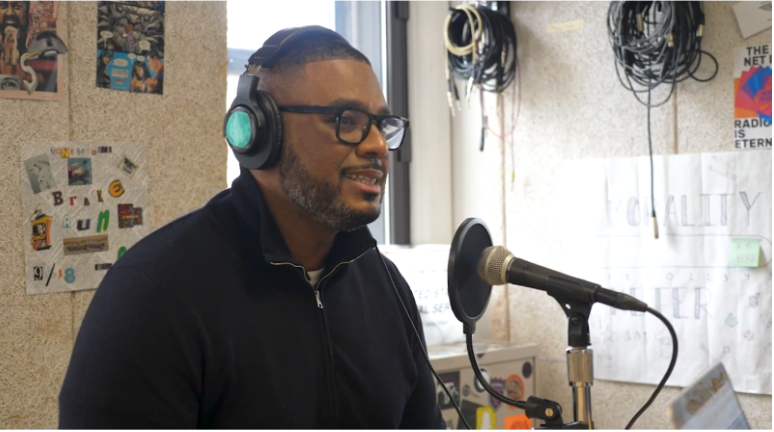
Click here to watch the full interview.
PENNSYLVANIA – Today, Lieutenant Governor Austin Davis joined the University of Pittsburgh student radio station’s podcast, Navigating the Ivory Tower, for a conversation on his path to public service and how the Shapiro-Davis Administration is expanding opportunity for Pennsylvanians through education and workforce pathways, tackling the housing shortage, and reforming the criminal justice system.
On the podcast, Lt. Governor Davis reflects on his journey from McKeesport to becoming the first Black Lieutenant Governor in Pennsylvania history, emphasizing the importance of young Pennsylvanians getting involved in their local government.
See below for key excerpts from the Lieutenant Governor’s appearance on Navigating the Ivory Tower, and listen to the full interview here:
Question: Can you talk about what it was like navigating your ivory tower and your experience through this path of being a politician?
Austin Davis: When I was 16 years old, there was an act of gun violence in my neighborhood and that was something that really shook me, right? It shook my foundation, and that sense of safety and security that you would hope every person has in their neighborhood. I decided that I wanted to do something about it…So when I went to a city council meeting, the first thing that I realized when I got there was two things: one, there was nobody who looked like me serving in city government, and there was nobody who was addressing the issue of gun violence. So at the time, I decided to start a Youth Advisory Council with the help of my mayor at the time in my community and started a violence prevention organization made up of young people from my high school in my neighborhood to try to take on the epidemic of gun violence that was plaguing our community. And that was really the beginning point of what put me on this journey of public service and politics that led me to this point today.
Question: So were there ever moments where you just felt really underestimated throughout your political career? And how did you respond whenever you felt those ways?
Austin Davis: I think I felt underestimated at every point in my career, from being a young person showing up to a city council meeting at 16 years old to launching a campaign for state representative at 28. And oh, by the way, when I ran for state representative and got elected, I was the first African American to ever win in that seat in that district, the first African American to ever represent a State House District in western Pennsylvania outside of the City of Pittsburgh. So, I would think I was underestimated from the beginning, that I’d be able to run a campaign and actually win. And then when I decided to run for lieutenant governor, to become Pennsylvania’s first Black Lieutenant Governor and the youngest Lieutenant Governor in the country, I think there were a lot of people who questioned whether I was going to be able to do it, and whether I was going to be able to pull it off. And I think what I did at every point that folks kind of underestimated me, was just lean in with hard work, just show up as my authentic self and talk about what my vision was for the people I was seeking to represent. And ultimately that resonated.
Question: How would you say that it would be a good way for either students to get involved, whether it’s activism or kind of knowing all what’s going on in their local government?
Austin Davis: All politics is local. Everything starts in your community and I hope people take away from our conversation that, for me, this started in McKeesport. It started with me wanting to make a difference in my community, and I think that is the most rewarding part of politics when you’re involved in your local community, at your local level, with your neighbors. So I’d encourage folks to … get out and talk to your neighbors and engage in your local community, and just be of service … That doesn’t mean everybody has to run for office, but I think we all have a responsibility to give back to our community in some way.
Question: As lieutenant governor, are there any specific policies that you would like to address whenever it comes to inequalities in Pittsburgh or anywhere else?
Austin Davis: We’ve done a lot of work in my office around public safety, around the issue of gun violence. We have created the first Office of Gun Violence Prevention here in Pennsylvania’s history. We know that oftentimes minority communities are victims of violent crime in a lot of ways, and so we’ve done a lot to help drive down that crime, but also to create ladders of opportunity for every person to succeed. I’m really proud of the fact that the Governor and I have made historic investment in public education in Pennsylvania to make sure that every child, regardless of their zip code, has access to a quality education to level the playing field. I’m really proud of the fact that we continue to create multiple avenues to success. If a young person wants to go to college, we want to make sure it’s affordable, but if they want to start a small business here in Pennsylvania, we want to make sure that they have the resources that they need to do that, or if they want to join an apprenticeship, join a union through an apprenticeship program, we want to make sure that’s available too. And I’m really proud of the work that we’ve done to expand those things, and I think all those things will make a huge difference in the equities that some communities have been facing.
Question: Pittsburgh is ranked one of the worst U.S. cities for Black home ownership and racial wealth disparities. Is there anything that you just specifically would want to do to address some of these gaps that we’re seeing?
Austin Davis: Housing is a huge issue that folks are grappling with here in Pennsylvania. It’s an issue that I personally dealt with. My wife and I bought a home two years ago when we were expecting our daughter and we put offers in on eight different homes before we finally got one of them accepted. And the Governor and I have rolled out our Housing Action Plan early a few weeks ago, and we’re putting a billion dollars to build and create more housing here in Pennsylvania so that every person can have that ability to find their piece of the American dream. I think the biggest problem is we need more supply. We don’t have enough of a supply, both for affordable and quality housing. We are seeing folks just struggle to find that and I think the Governor’s Housing Action Plan, the billion dollars we’re proposing, and a fund to do that is going to have a significant impact across Pennsylvania.
Question: Black Pennsylvanians are being incarcerated disproportionately and have high[er] rates than we see compared to some white residents here. How are you working to address some of these disparities?
Austin Davis: One of my roles as Lieutenant Governor is I chair the Pennsylvania Board of Pardons, and so for anybody who is seeking a pardon, or if you are convicted of a crime of violence and you’re sentenced to life, you have to come through the board to get a recommendation to the Governor. We’ve worked really hard to modernize that process to make sure we’re bringing second chances to folks a lot earlier. One of the first bills that the Governor signed was the Clean Slate Act to help clear up a lot of records for folks who have been trying to get things off their records. I think last year, it was 250 individuals alone. And so we are starting to see a lot of progress as it relates to criminal justice reform in Pennsylvania, but the work we’re doing in the pardon section, I think, is really rewarding from expanding the amount of folks who are working in the office, making it easier for folks to apply online.
###